
Best Gold IRA Companies (2026 Review)
Ranked review of Augusta, Goldco, and Birch Gold Group with fee breakdowns and IRS rules.
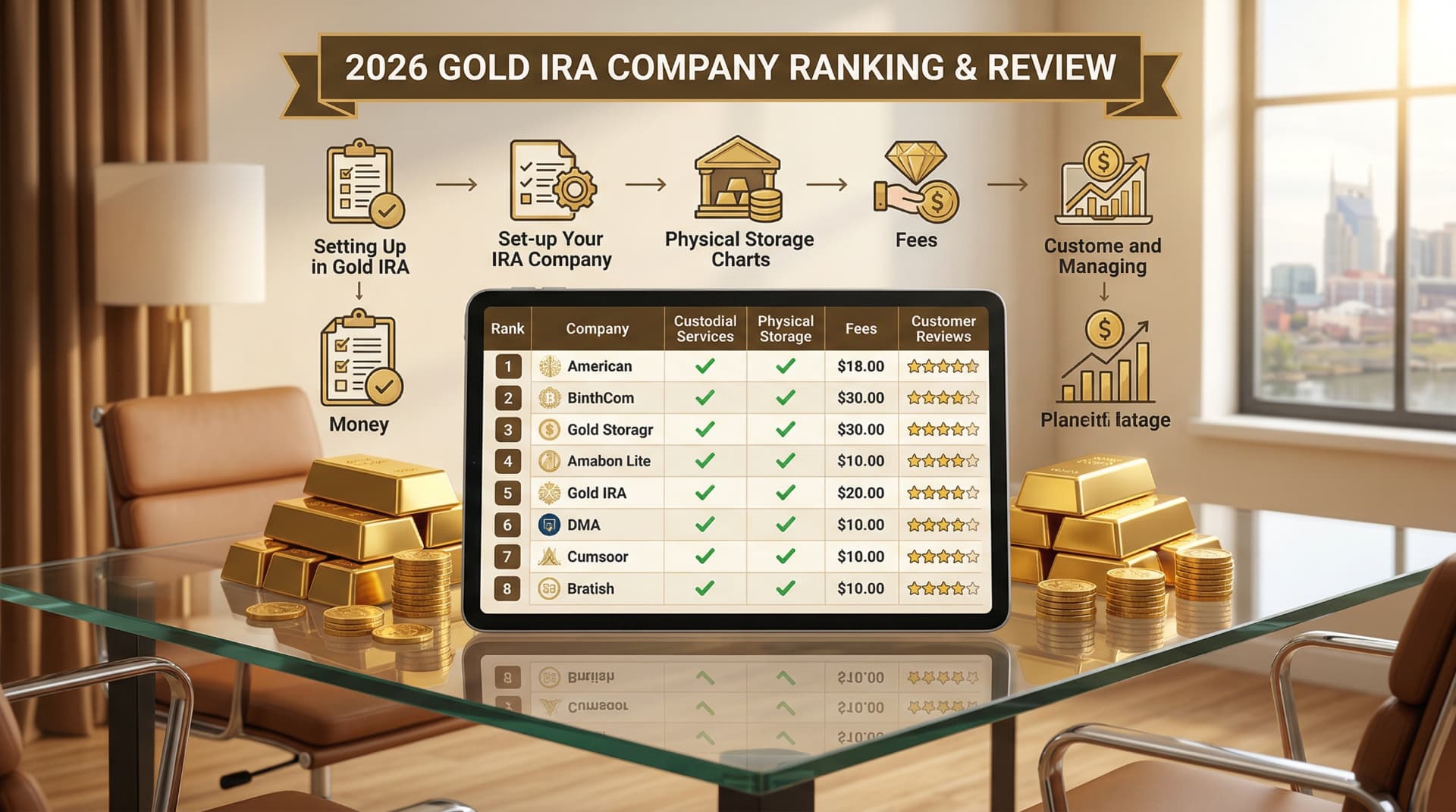
The Short Answer
The best Gold IRA companies for 2026 are Augusta Precious Metals (best transparency), Goldco (best for first-timers), and Birch Gold Group (best education) — all are BBB A+ rated with proven track records.
Best Is a Gold IRA Worth It? Companies (2026 Review)
By DadAlt Investments | Category: Gold | Last Updated: March 2026
Gold crossed $3,000 per ounce in early 2026 and has climbed substantially since — and with it, interest in gold IRAs has surged among investors looking to diversify their retirement savings beyond stocks and bonds. A gold IRA is a self-directed individual retirement account that holds IRS-approved physical precious metals rather than paper assets, giving you the tax advantages of a traditional or Roth IRA combined with the inflation-hedging properties of gold. But the gold IRA industry is not uniformly trustworthy. Hidden markups on metals, opaque fee structures, and high-pressure sales tactics have cost some investors a meaningful portion of their principal before they ever earn a return. This guide reviews the three best gold IRA companies for U.S. investors in 2026 — Augusta Precious Metals, Goldco, and Birch Gold Group — breaks down the IRS rules every gold IRA investor must understand before opening an account, and gives an honest comparison of gold IRAs against Gold IRAs versus physical gold and gold ETFs so you can decide which approach, if any, actually fits your situation.
What Is a Gold IRA and Who Actually Needs One?
The Simple Definition
A gold IRA is a self-directed IRA (SDIRA) — a retirement account structure that the IRS permits to hold alternative assets beyond the standard stocks, bonds, and mutual funds offered by traditional brokerages. Instead of paper securities, a gold IRA holds physical precious metals: primarily gold, but also silver, platinum, and palladium, depending on the company and account structure.
The gold IRA company you work with is not actually your IRA custodian — it is a precious metals dealer. The company helps you select IRS-approved metals, coordinates with a separate IRS-approved custodian (such as Equity Trust Company or STRATA Trust Company) who actually administers the account, and arranges storage at an IRS-approved depository (such as Delaware Depository or Brink's Global Services). Understanding these three separate parties — dealer, custodian, and depository — prevents confusion when fees and responsibilities get murky.1
IRS Rules: What Qualifies
The IRS imposes specific requirements on metals held in an IRA. These are not optional guidelines — violating them can trigger the disqualification of your entire IRA, treating the full balance as a taxable distribution with potential penalties:
Gold purity requirements:
- Gold must be a minimum of 99.5% pure (0.995 fineness) under IRC Section 408(m)(3)
- The single exception is the American Gold Eagle coin, which contains 91.67% gold but is specifically authorized by statute despite not meeting the standard purity threshold
- Eligible gold products include investment-grade bullion bars and coins from government mints: American Gold Buffalo, Canadian Maple Leaf (99.99% pure), Australian Gold Kangaroo (99.99% pure), Austrian Philharmonic (99.99% pure), and bars from COMEX/NYMEX-approved refiners
- Collectible coins, numismatic coins, and jewelry are explicitly prohibited, even if made of gold. Only investment-grade bullion counts.
Other IRS requirements:
- Silver must be 99.9%+ pure; platinum and palladium must be 99.95%+ pure
- All metals must be purchased through the custodian after the account is established — you cannot contribute gold you already own
- Metals must be stored in an IRS-approved depository under custodian oversight; personal storage is a prohibited transaction (see FAQ below)
2026 contribution limits (same as standard IRA limits):
- Under age 50: $7,500/year
- Age 50 and older: $8,600/year (includes catch-up contribution)
- Because most gold IRA company minimums ($10,000–$50,000) far exceed these annual contribution limits, most gold IRAs are funded through rollovers from 401(k)s, traditional IRAs, or other qualified retirement accounts — not annual contributions.2
Who Benefits from a Gold IRA
A gold IRA is most appropriate for:
- Investors age 50+ nearing or in retirement who want to reduce volatility in their portfolio with a non-correlated asset class
- Those seeking inflation protection — gold has historically maintained purchasing power over long periods when paper currencies have not
- Dollar-hedging investors concerned about U.S. currency devaluation or systemic financial risk
- Investors who want physical asset ownership within a tax-advantaged account structure
- Those with substantial retirement savings who want a specific 5%–15% allocation in hard assets as a portfolio diversifier
Who Should Skip a Gold IRA
A gold IRA is generally not the right choice for:
- Investors under 50 with a long investment horizon — equity index funds have dramatically outperformed gold over any 20–30 year period. A 25-year-old who puts $25,000 into gold IRAs instead of a low-cost index ETF will almost certainly be poorer in retirement.
- Investors with limited capital — gold IRAs carry setup fees, annual custodian fees, and storage fees ($175–$300+ per year in total ongoing costs). On a $10,000 account, these fees represent 1.75%–3% annually before the gold moves a single dollar.
- Those who need liquidity — gold IRA assets cannot be accessed without triggering distribution rules (taxes and potential penalties before age 59½); there is no "sell now" button like a brokerage account
- Investors who want dividend income — physical gold produces no income, no dividends, and no yield; it is purely a price-appreciation and wealth-preservation vehicle
The honest guidance: for most investors under 50 reading this guide, a Roth IRA invested in low-cost index funds is a better use of retirement dollars than a gold IRA. Gold IRAs make most sense as a supplement to, not a replacement for, a diversified equity portfolio.
Quick Comparison: Best Gold IRA Companies (2026)
| Company | Setup Fee | Annual Fees | Minimum Investment | Storage Options | BBB Rating | Best For |
|---|---|---|---|---|---|---|
| Augusta Precious Metals | ~$250 (first year included) | ~$225/year (admin + storage combined on qualifying accounts) | $50,000 | Delaware Depository (segregated) | A+ | Investors with $50K+ seeking white-glove service and maximum transparency |
| Goldco | $0 | ~$225/year combined ($80 admin + $100–$150 storage) | $25,000 | Brink's Global, Delaware Depository | A+ | First-time buyers; 401(k) rollover support; highest buyback guarantee |
| Birch Gold Group | ~$50 (setup) + $30 (wire) | ~$235/year (custodian + storage) | $10,000 | Delaware Depository, Brink's Global | A+ | Investors starting at $10K–$50K; flat-rate fee structure; platinum and palladium access |
Fees are estimates based on published or reported figures as of March 2026. Always request a written fee schedule from any company before opening an account. Annual fees typically include custodian administration, storage, and insurance.
#1 Augusta Precious Metals — Best Overall for Serious Investors
Augusta Precious Metals consistently earns the top ranking in independent gold IRA reviews in 2026, and the reasons are substantive rather than marketing-driven: it has the most transparent published fee structure in the industry, the most rigorous educational resources including a Harvard-trained economist on staff, and a track record of essentially zero unresolved customer complaints across thousands of verified reviews.3
Minimum Investment: $50,000
This is the highest minimum investment threshold of any major gold IRA provider, and it deliberately limits Augusta's client base to high-net-worth investors who are serious about a substantial precious metals allocation. If you are investing less than $50,000, Augusta is simply not available to you — but the elevated minimum also means Augusta's service model, staffing, and educational investment are calibrated for investors making meaningful financial commitments.
Fees: Transparent and Competitive at Scale
Augusta publishes a detailed fee example on its website — a rarity in this industry, where many companies require a phone call to get any pricing:
- Setup/one-time fee: approximately $250, which covers the first year's administrative costs
- Annual recurring fees: approximately $225/year covering both custodian administration and storage (combined flat-rate structure on qualifying accounts)
- Storage: Segregated storage at the Delaware Depository — your gold is stored in its own separately identified vault space, not commingled with other clients' metals
- Fee waivers: Qualified investors may be eligible for up to 10 years of waived annual custodian and storage fees on accounts meeting certain thresholds — one of the most significant fee structures available in the industry3
At $50,000 invested with $225/year in fees, Augusta's all-in annual cost is approximately 0.45% of assets — lower than most actively managed mutual funds and reasonable for a self-directed IRA with physical asset management.
Education: Harvard-Trained Economist and Transparent Library
Augusta employs Devlyn Steele, a Harvard Business School-trained economist, to lead its investor education program. This includes:
- A private one-on-one web conference with Devlyn Steele before any account is opened — not a sales call but a genuine educational session on whether gold belongs in your portfolio
- A comprehensive video library covering gold IRA basics, market context, and the honest case for and against gold allocation
- Written guides explaining IRS rules, fee structures, and market risks
Augusta's educational approach notably includes content titled "why not to own gold" — a level of honest self-assessment that is genuinely uncommon in an industry that frequently uses fear-based marketing about imminent financial collapse to sell precious metals to retirees.3
Ratings and Reputation
- Better Business Bureau: A+ rating
- Business Consumer Alliance: AAA rating (highest possible)
- Google Reviews / Consumer Affairs / Trustpilot: 4.9/5 average across thousands of verified reviews
- Virtually zero unresolved complaints in an industry with frequent Better Business Bureau complaint patterns
Buyback Policy
Augusta has historically never declined to buy back precious metals it has sold, though it does not provide a formal written guarantee of future buybacks. It charges a 5% spread on repurchases — a standard industry practice, and Augusta discloses it openly in its transaction agreements rather than burying it. The 24-hour cancellation policy allows customers to cancel any new purchase within 24 hours if they find a better offer elsewhere.
What Augusta Is Best For
- Investors with $50,000 or more to allocate to a gold IRA
- Those who want the highest level of fee transparency and educational depth in the industry
- Investors who will benefit from a dedicated account specialist for the life of the account
- Anyone who wants to understand the genuine case for gold in their portfolio before committing capital — rather than being sold by a call center
Limitation: The $50,000 minimum puts Augusta out of reach for most investors just beginning a precious metals allocation. The application process also requires a phone call — there is no fully online signup. Storage is limited to gold and silver (no platinum or palladium). Augusta's $275 application fee is among the higher setup costs in the industry, though it is included in the first year's flat fee.
#2 Goldco — Best for Customer Service and Buyback Program
Goldco has been operating since 2006, giving it nearly two decades of history in the gold IRA space — a meaningful credential in an industry where newer entrants frequently lack the institutional depth to handle complex rollovers, volatile periods, and the simultaneous demand that comes during market stress. Its defining strengths are the most comprehensive guided rollover support in the category and the strongest buyback guarantee available.4
Minimum Investment: $25,000
At $25,000, Goldco is accessible to a broader range of investors than Augusta while still targeting serious precious metals buyers rather than the casual experimenter. Most investors fund Goldco accounts through 401(k) rollovers or IRA transfers rather than annual contributions, and $25,000 is an attainable rollover threshold for investors in their 40s or 50s with established retirement accounts.
Fees
- Setup fee: $0 for standard accounts
- Annual administration fee: approximately $80/year
- Annual storage fee: $100/year (non-segregated/commingled); $150/year (segregated)
- Combined annual total: approximately $225/year for commingled or $275/year for segregated storage
Goldco does not prominently publish its fees on its website — a common industry practice that requires a phone call to confirm pricing. The figures above are based on confirmed reporting from independent reviewers. Always request written fee disclosure before committing to any account.5
The Highest Buyback Guarantee
Goldco's most distinctive competitive feature is its highest-buyback guarantee: when you are ready to liquidate your gold IRA holdings, Goldco guarantees it will pay the highest published buyback price available among its competitors at that time. There are no liquidation fees and no buyback commissions.
For new investors who are uncertain about long-term liquidity, this is meaningful. One of the primary concerns investors have about physical gold IRAs is the exit — what happens when you want to sell? Goldco's guarantee removes the uncertainty of whether you will receive a fair price, and the absence of liquidation fees is a genuine differentiator against companies that charge 1%–3% on buybacks.
Guided 401(k) Rollover Support
Goldco is widely considered the best gold IRA company for first-time rollovers from 401(k) accounts. The company assigns a precious metals specialist to each account who walks the investor through:
- Choosing between a direct rollover (custodian-to-custodian) and an indirect rollover (with the 60-day completion window)
- Selecting IRS-compliant gold and silver products for the account
- Coordinating paperwork between the 401(k) plan administrator and the new gold IRA custodian
- Selecting storage options and depository location
Goldco's primary custodian partnership is with Equity Trust Company, which administers $70+ billion in alternative assets and is the largest IRA custodian in the precious metals space. Storage is through Brink's Global Services or Delaware Depository.
Ratings and Reputation
- Better Business Bureau: A+ rating with thousands of verified reviews
- Business Consumer Alliance: AAA rating
- Trustpilot: approximately 4.8/5 from 1,750+ verified reviews
- Recipients of the Gold Stevie Award for customer service in 2024 and 2025
- Celebrity endorsers include Sean Hannity, Dennis Quaid, and Chuck Norris — useful for brand recognition, though investors should evaluate the company on its service record and fee structure rather than celebrity association
What Goldco Is Best For
- Investors making their first gold IRA or precious metals IRA purchase who want thorough guided support
- Those rolling over 401(k) assets and wanting end-to-end rollover coordination
- Investors who prioritize the highest buyback guarantee as their liquidity protection strategy
- Those starting with $25,000–$50,000 who do not qualify for Augusta's minimum
Limitation: Fee structure is not published on Goldco's website — you must speak with a representative to confirm current pricing, which is inconvenient during initial research. The educational content section can redirect to a phone call prompt rather than delivering the resource directly. Goldco's IRA investments are limited to gold and silver coins and bars — no platinum or palladium exposure in the IRA structure.
#3 Birch Gold Group — Best for Smaller Starting Balances
Birch Gold Group, founded in 2003, is the longest-tenured of the three companies reviewed here and the most accessible by minimum investment. Its $10,000 minimum makes it the most practical entry point for investors who want to begin a precious metals IRA without committing $25,000 or $50,000 upfront. Birch is also the only company on this list that offers platinum and palladium in addition to gold and silver — important for investors who want a diversified precious metals IRA rather than pure gold exposure.5
Minimum Investment: $10,000
The $10,000 threshold is low enough that many investors can fund a Birch Gold IRA through a combination of an IRA transfer and modest additional contributions, rather than requiring a full 401(k) rollover. Birch waives all first-year fees for accounts opening with $50,000 or more, and also waives setup fees for accounts of that size.
Fees: Flat-Rate Structure Favors Larger Accounts
Birch charges a flat-rate annual fee structure rather than a percentage of account value. This structure is meaningfully more favorable for investors with larger balances:
- One-time setup fee: approximately $50
- Wire transfer fee: approximately $30 (one-time)
- Annual custodian fee: approximately $100/year
- Annual storage fee: approximately $100–$150/year (segregated or commingled options)
- Combined annual total: approximately $200–$280/year depending on storage selection
- First-year fees: waived on accounts of $50,000 or more
Why the flat-rate structure matters: if a competitor charges 0.5% annually on a $200,000 account, they collect $1,000/year. Birch's flat $250–$280/year costs 87% less at that account size. As your gold IRA grows, the percentage-equivalent cost of Birch's flat fee falls continuously while percentage-based fees grow with your balance.6
Custodian and Storage Options
Birch gives investors a choice of custodians — Equity Trust Company or STRATA Trust Company — and a choice of depositories — Delaware Depository or Brink's Global Services. This flexibility is a genuine differentiator: most gold IRA companies funnel all clients through a single custodian and depository, limiting the investor's input on where and how their metals are managed.
Both segregated and commingled storage are available at Birch. Segregated storage — where your metals are stored in their own individually identified vault space — is recommended for investors who want to ensure they receive back the specific coins and bars they deposited at distribution, not a fungible equivalent. Commingled storage stores metals with other clients' holdings but reduces annual fees.
Wide Precious Metals Selection Including Platinum and Palladium
Birch is the only company on this list that offers IRS-approved platinum and palladium alongside gold and silver within the IRA structure. For investors seeking a truly diversified precious metals allocation — not just gold price exposure — this matters. IRS rules for platinum require 99.95%+ purity; eligible products include Canadian Platinum Maple Leaf and bars from approved refiners.
Education and No-Pressure Sales Approach
Birch Gold Group consistently receives praise in independent reviews for a no-pressure sales culture — representatives explain options clearly without pushing specific products or rushing decisions. Birch assigns dedicated IRA specialists who walk investors through storage options, metal selection, and IRS compliance requirements in more detail than most competitors.
Ratings and Reputation
- Better Business Bureau: A+ rating
- Business Consumer Alliance: AAA rating
- Trustpilot: approximately 4.7/5 from thousands of verified reviews
- Over 20 years in business — one of the longest-tenured gold IRA companies still operating under the same ownership structure
Limitation: The $10,000 minimum, while lower than competitors, is still substantial for casual investors. The setup and wire fees add modest one-time friction. Birch's website has been noted in some reviews as providing slightly less intuitive navigation than competitors. Celebrity endorsements have been part of its marketing — again, evaluate on service record, not spokesperson.
What to Look for in Any Gold IRA Company
If you compare providers beyond the three reviewed above, these are the criteria that separate reputable companies from the rest:
1. Fee Structure: Total Annual Cost, Not Just One Number
Gold IRA fees come from three separate sources:
- Setup/opening fee: One-time charge for establishing the account ($0–$300 depending on company)
- Annual custodian fee: Charged by the IRS-approved custodian for account administration ($75–$200/year)
- Annual storage fee: Charged by the depository for physical storage and insurance ($100–$200/year depending on segregated vs. commingled)
The total ongoing annual cost for most accounts runs $175–$300/year. Always ask for a single number combining all three rather than evaluating each line item separately. On a $25,000 account, $300/year represents 1.2% annually — before your gold moves a dollar.
2. Dealer Spread: The "Silent Killer" of Returns
The most significant and least-discussed cost in gold IRAs is the dealer spread — the markup above the spot price of gold that the dealer charges when selling you metals for the account. Spreads of 3%–8% on standard bullion are common; some companies have been documented charging far more on "collectible-style" coins they push investors toward.
The SEC has charged precious metals firms for markups as high as 130% — not mainstream companies, but a warning that the industry is not uniformly regulated at the retail level. Always ask for the per-item premium over spot price in writing, and compare the same product across at least two providers before purchasing. This is where the most money is lost, not in annual fees.1
3. Storage Type: Segregated vs. Commingled
- Segregated storage: Your specific metals — the actual bars or coins you purchased — are stored separately and identified to your account. At distribution, you receive those specific items back. Higher annual cost (~$50–$100 more per year), but full asset clarity.
- Commingled storage: Your metals are stored alongside other clients' holdings of the same type. At distribution, you receive the equivalent value in metals of matching purity and form — not necessarily the specific items you deposited. Lower annual fee, but you do not hold title to specific pieces.
For long-term investors, segregated is generally worth the additional annual cost.
4. IRS-Approved Custodian: Understand Who Actually Holds Your Account
The gold IRA company is a dealer — it sells metals and coordinates the process. The custodian (Equity Trust, STRATA Trust, etc.) is the IRS-regulated entity that actually administers your self-directed IRA, files the required reports, and holds legal custody. These are two different organizations. Verifying that the custodian is an IRS-approved, established institution with significant assets under administration is a critical due diligence step.
5. Buyback Policy: Verify the Exit Before You Enter
Before committing to any gold IRA company, confirm in writing:
- Does the company guarantee to buy back your metals when you want to sell?
- What is the buyback price relative to spot? Is there a spread?
- Are there liquidation fees or commissions on the repurchase?
Goldco's highest-buyback guarantee with no liquidation fees is the strongest policy on this list. Augusta historically never declines a buyback but does not provide a written guarantee. Any company that does not clearly answer these questions before you open an account is a warning sign.
6. Transparency: Ask for Everything in Writing Before Signing
Any reputable gold IRA company will provide, on request and before you commit:
- Complete written fee schedule (setup, annual custodian, annual storage)
- Per-item pricing on the specific metals you plan to purchase, showing the price per ounce and premium over spot
- The name of the IRS-approved custodian and depository they use
- The buyback policy in writing, including the spread they charge on repurchases
If a company responds to these requests with pressure to decide quickly, vague answers, or pushes you toward high-premium "numismatic" or "collectible" coins rather than standard bullion, end the conversation.
Gold IRA vs. Physical Gold vs. Gold ETFs: A Realistic Comparison
Not everyone who wants gold exposure should open a gold IRA. Here is an honest side-by-side comparison:
| Gold IRA | Physical Gold (No IRA) | Gold ETF (GLD, IAU) | |
|---|---|---|---|
| Tax treatment | Tax-deferred (Traditional) or tax-free (Roth) | Capital gains on profits (28% max collectibles rate without IRA wrapper) | Capital gains on profits (28% max collectibles rate in taxable accounts) |
| Setup friction | High — multiple parties, weeks-long process | Low — buy from a dealer, take possession | Very low — buy like a stock in any brokerage |
| Annual fees | $175–$300/year (custodian + storage) | None beyond personal storage and insurance costs | Low expense ratios: GLD ~0.40%/year; IAU ~0.25%/year |
| Liquidity | Low — subject to IRA distribution rules and penalties before 59½ | High — sell to any dealer at any time | Very high — sell any trading day like a stock |
| Minimum investment | $10,000–$50,000 depending on company | Any amount — fractional gold coins available for under $100 | Any dollar amount (fractional share access at most brokerages) |
| Physical ownership | Yes — metals stored in your name at an IRS-approved depository | Yes — you physically hold the metals | No — you own shares of a fund that holds gold |
| IRS purity requirements | Yes — 99.5%+ purity, government-minted or approved refiner | No — any gold product permitted | N/A |
| Home storage allowed | No — prohibited transaction; must use IRS-approved depository | Yes | N/A |
| Best for | Tax-advantaged long-term wealth preservation; portfolio allocation 5%–15% | Immediate physical ownership; emergency preparedness; modest amounts | Lowest-friction gold exposure; portfolio hedging without storage logistics |
The honest summary:
- Gold IRA is the right structure if you have $25,000+ in an existing retirement account to roll over, you want gold exposure within a tax-advantaged structure, and you are comfortable with the illiquidity of retirement account rules.
- Physical gold (outside an IRA) is appropriate for emergency preparedness holdings, modest amounts where IRA fees would be disproportionate, or investors who want immediate physical control.
- Gold ETFs (GLD, IAU) are the lowest-friction, most liquid way to get gold price exposure. If your primary goal is portfolio diversification against equity market drawdowns, a gold ETF in a standard brokerage account achieves this with zero storage logistics and minimal fees. The 28% long-term capital gains rate for gold as a "collectible" is a tax disadvantage — but this same rate applies to gold IRAs at distribution for traditional IRA accounts anyway.7
FAQ
Is a Gold IRA Actually Backed by Physical Gold?
Yes — when properly structured with a reputable company and IRS-approved custodian and depository, your gold IRA holds real, physical IRS-approved bullion in a secure vault in your name. You can typically request to see documentation of your specific holdings (serial numbers, weights, and purity certificates) from the depository.
The caveat: this is only true when you work with legitimate, IRS-compliant providers and an established depository. Some "home storage gold IRA" promotions have advertised the ability to keep metals at home — this is a prohibited transaction under IRS rules that disqualifies the account and triggers a taxable distribution. The only legal gold IRA structure stores metals in an IRS-approved third-party depository.
What Is the Minimum to Open a Gold IRA?
Minimums vary significantly:
- Birch Gold Group: $10,000
- American Hartford Gold: approximately $10,000
- Goldco: $25,000
- Augusta Precious Metals: $50,000
The key nuance: because most gold IRA company minimums far exceed the IRS's $7,500 annual contribution limit, most accounts are funded through rollovers from existing 401(k)s, traditional IRAs, or other qualified retirement accounts — not through new annual contributions. A direct rollover (custodian-to-custodian) is the most common funding method and avoids the 60-day IRA rollover deadline and the one-rollover-per-year limitation that applies to indirect rollovers.2
Can I Store My Gold IRA Metals at Home?
No. The IRS explicitly prohibits personal possession of metals held in an IRA. Storing IRA gold at home — in any form, including a home safe — is classified as a prohibited transaction under IRC Section 4975. The consequences are severe:
- The metals are treated as a distribution from the IRA
- The full fair market value becomes immediately taxable as ordinary income
- If you are under 59½, an additional 10% early withdrawal penalty applies
- The IRA account may be entirely disqualified
Some companies advertise "home storage gold IRAs" with offers of a free safe for signing up. These promotions are misleading and legally risky. Ignore them. All gold IRA assets must be stored in an IRS-approved, third-party depository.2
Separately: if you want to own physical gold that you keep at home, you are entirely free to do so — you simply cannot call it an IRA or claim the associated tax advantages.
Are Gold IRA Companies Regulated?
Yes, but the regulatory landscape is layered and worth understanding:
- IRS regulation: The IRS governs what assets are eligible, how custodians must administer accounts, and storage and distribution requirements — the foundational regulatory layer
- IRS-approved custodians: Must be chartered financial institutions (banks, federally insured credit unions, or entities specifically approved by the IRS). Equity Trust and STRATA Trust are regulated custodians subject to standard financial institution oversight.
- Depositories: Major depositories (Delaware Depository, Brink's) operate under state and federal regulations, carry comprehensive insurance (often through Lloyd's of London), and are subject to custodian oversight
- The gold IRA dealer (Augusta, Goldco, Birch, etc.) is a precious metals retail dealer — it is subject to general consumer protection law and FTC regulation, but is not a regulated financial institution in the same sense as a bank or brokerage
The gap in regulation is at the dealer level. The SEC has taken enforcement action against specific precious metals dealers for egregious pricing fraud, but the category lacks the comprehensive securities regulation that applies to stock brokerages. This is why independent research, written fee disclosure, and spread transparency are essential before committing to any gold IRA company.1
Sources and References
Disclaimer: This article is for informational and educational purposes only and does not constitute financial, tax, or investment advice. Gold IRA fees, minimums, and company offerings change frequently — verify all figures directly with the company before opening an account. Past performance of gold is not indicative of future results. Investing in precious metals involves risk including potential loss of principal. Always consult a qualified financial advisor before making retirement account decisions. DadAlt Investments may earn affiliate commissions from some links in this article at no cost to you.
Recommended Reading
- Augusta vs Goldco vs Birch Gold Group
- Is a Gold IRA Worth It? Pros & Cons
- Gold IRA vs Physical Gold: Which Is Better?
Footnotes
-
IRAWealthGuide. "Best Gold IRA Companies of 2026: Avoid Costly Hidden Fees." January 14, 2026. https://irawealthguide.com/best-gold-ira-companies/ — SEC enforcement against Red Rock Secured (alleged markups up to 130%); dealer spread as the "silent killer" of returns; Augusta $225 recurring annual fee example; Goldco $80 admin + storage fee baseline; Birch ~$235/year custodian fee cited; custodian vs. dealer distinction; three-party structure (dealer, custodian, depository). Always request per-item premium over spot in writing; segregated vs. non-segregated storage explained. ↩ ↩2 ↩3
-
Birch Gold Group. "Gold IRA Rules and Regulations." January 7, 2026. https://www.birchgold.com/blog/retirement/gold-ira-rules/ — 2026 IRA contribution limits: $7,500 under 50, $8,600 age 50+. Gold purity: 99.5% minimum per IRS rules; American Gold Eagle exception at 91.67%. IRS-approved custodian required; custodian handles administration and coordinates depository storage. IRS prohibits home storage; home storage treated as prohibited transaction/taxable distribution. Early withdrawal penalty: 10% before age 59½. Required Minimum Distributions begin at age 73 for traditional gold IRAs. Rollovers (401k, traditional IRA, Roth IRA, SEP IRA) permitted without tax penalties. Swiss America: 15% excise tax on prohibited transactions; 100% excise tax if not corrected. ↩ ↩2 ↩3
-
CNBC Select. "The Best Gold IRA Companies of March 2026." March 2026. https://www.cnbc.com/select/best-gold-ira-companies/ — Augusta Precious Metals: $50,000 minimum; Delaware Depository (segregated storage); up to 10 years waived annual fees on qualifying accounts; Harvard-trained economist Devlyn Steele leads education program; "why not to own gold" content as transparency signal; historically never declined buyback; 5% buyback spread disclosed openly; 24-hour cancellation policy; no online application. Average gold IRA investment rose from $35,000 (2023) to $100,000 (2024). Gold 27% annual return in 2024, outperforming S&P 500 by 2%. ↩ ↩2 ↩3
-
Focus on the User. "10 Best Gold IRA Companies in 2026: Reviews & Ratings." January 1, 2026. https://www.focusontheuser.org/best-gold-ira-companies/ — Goldco: founded 2006; A+ BBB; AAA BCA; 4.8/5 Trustpilot from verified reviews; Equity Trust custodian ($70B+ assets under administration); highest-buyback guarantee with no liquidation fees; dedicated specialist for rollover coordination; Gold Stevie Award 2024 and 2025 for customer service. Birch Gold Group: A+ BBB; AAA BCA; 4.7/5 Trustpilot; multiple custodian options (Equity Trust, STRATA); multiple depository options (Delaware, Brink's); platinum and palladium available; dedicated IRA specialists; no-pressure approach; 20+ years in business. ↩
-
Rare Metal Blog. "Best Gold IRA in 2026 — Top 5 Companies Reviewed & Compared." December 30, 2025. https://www.raremetalblog.com/best-gold-ira-companies/ — Goldco: $25,000 minimum; fee detail requires phone call (not published online); $225/year combined reported; non-segregated storage $100/year; segregated $150/year; Brink's and Delaware Depository storage partners. Birch Gold Group: $10,000 minimum; flat annual fee structure; setup ~$50 + $30 wire; custodian ~$100 + storage ~$100–$150; first-year fees waived at $50,000+. Flat-rate advantage at large account sizes explained. Custodian choice: Equity Trust or STRATA. Depository choice: Delaware or Brink's. ↩ ↩2
-
Money.com. "7 Best Gold IRA Companies of March 2026." March 2026. https://money.com/best-gold-ira-companies/ — Birch Gold Group: flat-rate annual fee (not percentage-based) favorable for high-balance accounts; Equity Trust and STRATA Trust custodian options; Delaware Depository and Brink's storage options; A+ BBB. Goldco: A+ BBB, AAA BCA; Brink's and Delaware Depository storage; Equity Trust custodian. Augusta: founded 2012; Delaware Depository; education library includes video blog on why not to own gold; transparency in an industry that uses fear-based marketing. ↩
-
CBS News. "What Is the IRS Loophole for Gold?" March 2026. https://www.cbsnews.com/news/what-is-the-irs-loophole-for-gold/ — Physical gold taxed as "collectible" at maximum 28% long-term capital gains rate without IRA wrapper. Gold IRA structure provides same tax treatment as traditional/Roth IRA, bypassing 28% collectible rate for traditional accounts (taxed as ordinary income at distribution). Gold ETFs (GLD, IAU) also subject to 28% collectible rate in taxable accounts. Gold IRA: metals purchased through custodian post-account-establishment; cannot contribute existing gold holdings. Gold price context: climbed from approximately $2,600/oz (early 2025) to over $3,000+/oz (early 2026). ↩
Frequently Asked Questions
How do I choose the right Gold IRA company?
Compare fees (setup, annual, storage), minimum investment requirements, customer reviews, BBB rating, and educational resources. Schedule a free consultation with your top 2–3 choices before committing.
What types of gold can I hold in a Gold IRA?
IRS rules allow American Gold Eagles, Canadian Gold Maple Leafs, gold bars of .995+ purity, and select other coins. Common collectible coins and South African Krugerrands are not eligible.
How long does it take to set up a Gold IRA?
Setup takes 1–2 weeks. You'll choose a custodian, fund via rollover or transfer, select your metals, and they're shipped to an approved depository. Most companies handle the paperwork for you.

About the Author
Jared DeValk
Founder, DadAlt Investments
Father, alternative investment researcher, and founder of DadAlt Investments. 14+ years turning hard lessons into honest guidance for dads building real wealth.